Gov. Brown Recants Plan to Close California Youth Prisons

budgetIt looks like California Gov. Brown has had a change of heart about the fate of his state’s youthful offenders.

Brown has been busy slashing funds left and right as he attempts to get a handle on the state’s $15.7 billion budget shortfall, and for a while it looked like the Division of Juvenile Justice (formerly the California Youth Authority) was not long for this world. His proposed elimination of the agency elicited a hue and cry from the correctional officers’ union, various district attorneys and several law enforcement groups.

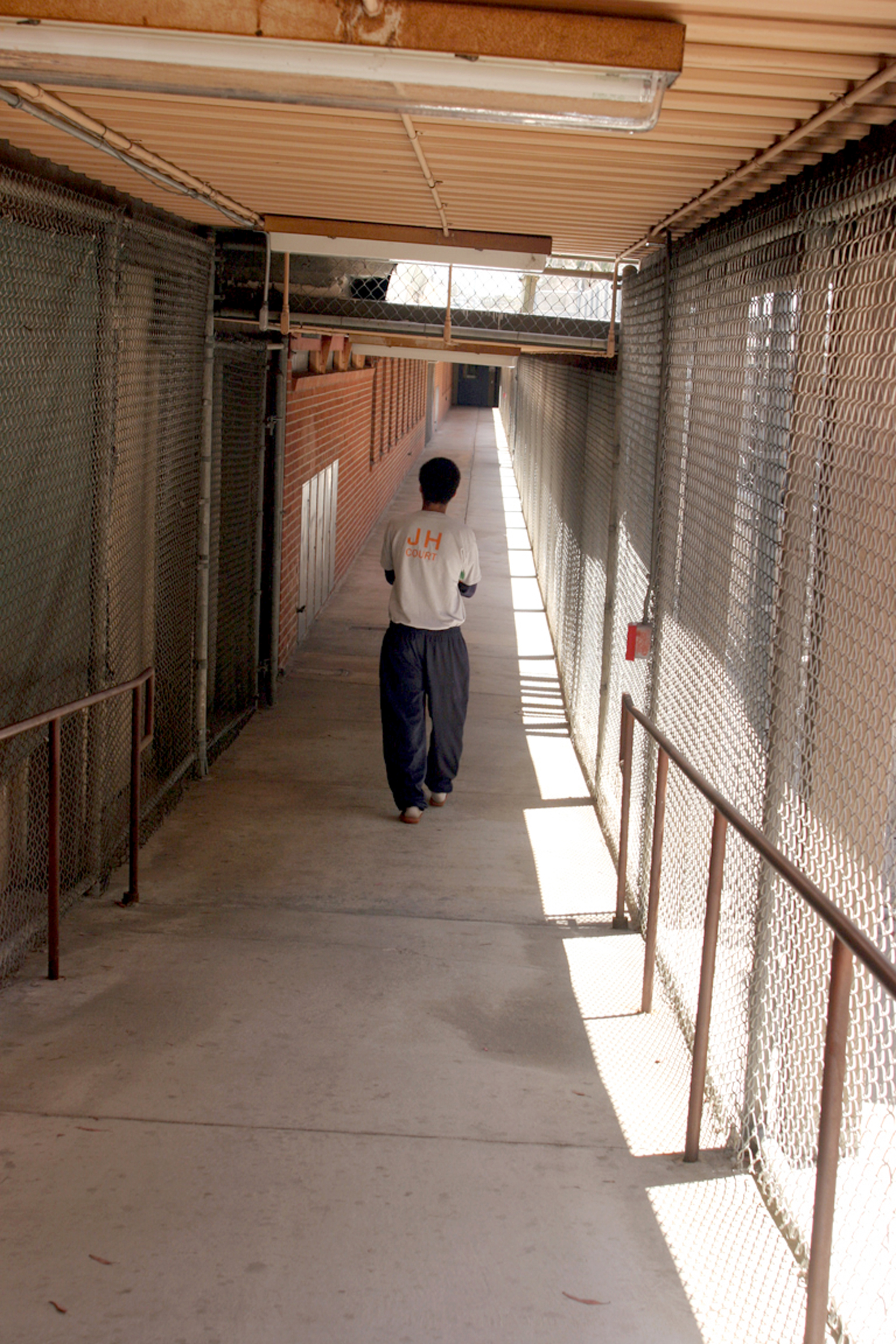
Despite the DJJ currently being under court oversight due to claims of systemic abuse and mistreatment of juvenile offenders, most groups agree that it has improved drastically from its sorry state in the 1990s. In those days roughly 10,000 kids were incarcerated there; today they number just over 1,000. Conditions and circumstances, while still often horrible, have also gotten better in that time.

So where do things stand if the DJJ has survived the chopping block? KKPC 89.3 brings us a look:

Under Brown’s revised proposal, juvenile parole operations will still be phased to county responsibility over the next two years. Furthermore, the jurisdictional age of the DJJ will go down to 23 from 25–meaning wards (other than those awaiting transfer to adult prison) will automatically be released from custody on their 23rd rather than 25th birthday.

The news was greeted with relief in numerous quarters:

California Department of Corrections and Rehabilitation Spokesman Bill Sessa says the governor’s reversal was for good cause.

‘The youth we are serving, some of them, are from counties that don’t have treatment programs for violent youth,’ he says. Moreover, Sessa says the DJJ has made great strides in streamlining its budget, closing some facilities and laying off headquarters staff. ‘We’re focusing on serving our youth,’ he says.

Department of Finance Spokesman H.D. Palmer adds that counties are already dealing with adult prison realignment. ‘And we didn’t want to overburden that process, knowing that there’s a transition period we’re going through right now,’ he says.

In Los Angeles County, which has about 300 juveniles in the state system, more than any other county, Chief Probation Officer Jerry Powers calls Brown’s change of heart ‘great news.’

Palmer’s observation on the overburdened state of the system is one that particularly resonates. Many of the counties involved do not have separate facilities for youth, a problem that is made far worse if the adult population is in chaos when the kids arrive.

While we advocate for rehabilitation over incarceration, there is a small percentage of youth offenders, often the excessively violent ones, who need to be put behind bars . We simply note that the overwhelming majority of youth offenders currently incarcerated can benefit from other programs, rather than simply being locked up.

“Often the ones going to DJJ are the most significant risk to public safety,” said Karen Pank, executive director of the Chief Probation Officers of California. The governor’s latest plan “is good for California as a whole, not just for probation departments or for counties. You need to ensure that there are all of the tools available for dealing with this population.”

When she heard this news our own Susan Lankford said “I like what Karen Pank has to say. We are definitely not set up in local counties to handle this population of young criminals. It sounds as though Sacramento has listened, at last!”

We are glad to see that Gov. Brown took a slightly longer-term view. Too often are short-term gains embraced despite grossly inflated long-term costs, particularly in politics.

Share

Dana Kaplan – A Call to Action: Criminal Justice Reform

Share

Recipe for a Dark Future: Kids in Solitary Confinement

Door to SolitaryAmy Fettig of the National Prison Project and Matt Simpson, of the Texas ACLU have tackled a rough topic- one to which advocates for juvenile justice should pay heed — the plight of juveniles in solitary confinement.

16 and Solitary: Texas Jails Isolate Children is their examination of this problem, and I would venture to call it required reading. Using data from a recent report,  Conditions for Certified Juveniles in Texas County Jails, by researchers at the Lyndon B. Johnson School of Public Affairs at the University of Texas, they provide even more ammunition in the battle to get our juveniles out of adult prisons.

Here is one key passage that I believe provides a good summation:

While in solitary confinement, children’s mental and physical health is severely compromised. The LBJ report notes the broad consensus among mental health experts that such long-term solitary confinement is psychologically harmful for adults. For children in solitary confinement, the impact is even more traumatic. Children experience time differently than adults, have a special need for social stimulation, and are damaged by forced isolation more quickly and severely than adults. It is also true that young people’s brains are still developing, which places youth at a higher risk of psychological harm when healthy development is impeded. But the psychological harm is not limited to developmental issues — it often means life or death. As the report notes, the risk of suicide and self-harm, including cutting and other acts of self-mutilation, increases exponentially for children in adult jails who are 36 times more likely to commit suicide than their counterparts in juvenile facilities.

Lives are quite literally on the line here. The difference between juvenile and adult psychology is thrown into stark relief when you look at the impact solitary confinement has on each. But that’s not all. In addition to the hazards these practices pose to the incarcerated, they also hold a dim outlook for those outside the prison bars.

Reviewing the data, the LBJ report notes ‘the impact of prolonged isolation may have mental health consequences that will make it difficult for these youth to reintegrate, and may increase the likelihood that they will recidivate.’ Solitary confinement hurts children and ultimately undermines public safety.

Once more it all comes down to foundations laid in childhood. Even though the rationale often presented is that the kids are put in solitary to protect them from the adult prison population (something that does need to occur), doing so simply damages them in other ways.

Children do not belong in adult facilities. As a matter of fact the vast majority would be better served by community programs, substance abuse / mental health aid, and other rehabilitation-oriented approaches. This is a fact proved over and over again by studies from both sides of the political aisle.

As publishers we have tried to address these issues both through our most recent book, Born, Not Raised, and through the news round-ups we present on this blog. We can only hope that by helping to put a human face on the kids behind bars we can mobilize people to make effective, and fiscally sensible, change.

Share

Where is the world’s prison capital? Would you believe Louisiana?

Cell at Camp HUnfortunately I find it all too easy to believe. As long time readers are aware, I’m the member of the team who is not in San Diego. I’m located in my home town of New Orleans, a city as rich in culture as it is in tragedy.

Cindy Chang of the New Orleans Times-Picayune showed us just how bad things have become in her cover story yesterday.

Louisiana is the world’s prison capital. The state imprisons more of its people, per head, than any of its U.S. counterparts. First among Americans means first in the world. Louisiana’s incarceration rate is nearly triple Iran’s, seven times China’s and 10 times Germany’s.

The hidden engine behind the state’s well-oiled prison machine is cold, hard cash. A majority of Louisiana inmates are housed in for-profit facilities, which must be supplied with a constant influx of human beings or a $182 million industry will go bankrupt.

I’ve often written about creeping privatization in our justice system, and with good reason. How can actual justice be involved when the bottom line is to fill as many beds as possible? It’s basic common sense that the two are incompatible, and the latter is ethically questionable.

Even worse is the fact that this approach is funneling money away from programs that do work. Chang continues:

More money spent on locking up an ever-growing number of prisoners means less money for the very institutions that could help young people stay out of trouble, giving rise to a vicious cycle. Louisiana spends about $663 million a year to feed, house, secure and provide medical care to 40,000 inmates. Nearly a third of that money — $182 million — goes to for-profit prisons, whether run by sheriffs or private companies.

‘Clearly, the more that Louisiana invests in large-scale incarceration, the less money is available for everything from preschools to community policing that could help to reduce the prison population,’ said Marc Mauer, executive director of The Sentencing Project, a national criminal justice reform group. ‘You almost institutionalize the high rate of incarceration, and it’s even harder to get out of that situation.’

It pains me to see my hope at the forefront of such a misguided and disastrous trend, especially in these recent years after Hurricane Katrina and the levee failure. We now lock up more human beings than any place else in the world, and yet we still have one of the highest rates of violent and property crime in the entire United States. It’s just not working.

If you want a look at what the rest of the nation will look like if we do not reverse this trend of privatization, read Ms. Chang’s article. It is an extensive and disturbing piece of reporting that will send chills down your spine. I’d also recommend Charles Mondonado’s article in Gambit Weekly – Privatizing Louisiana’s Prisons.

There is a truly frightening future being forged, and I am sitting on it’s leading edge. Please take a look at what is happening down here. Educate yourself before this model becomes the norm.

It is far more expensive to do nothing.

Share

Born, Not Raised Just Won an IPPY Award!

IPPY Award 2012We are thrilled to announce that our newest book – Born, Not Raised: Voices from Juvenile Hall – has just won an Independent Publisher Book Award. To be precise, it won their Independent Voice Award!

What are the “IPPY” Awards? Here is a description taken from their website:

The ‘IPPY’ Awards were conceived as a broad-based, unaffiliated awards program open to all members of the independent publishing industry, and are open to authors and publishers worldwide who produce books written in English and intended for the North American market.

We have worked hard to share a vision of the human beings behind the statistics. It is one thing to hear about the number of people incarcerated in the U.S. and quite another to be brought face-to-face with women and kids in the system and hear about it in their own words. This is why we create the books that we publish.

While it’s an ego boost to receive an award, the really important thing is that the recognition will help get these personal narratives in front of more readers. We are confident that the social issues we write about can not only be addressed, but can also be addressed in a fashion that improves the lot of many unfortunates, while also reducing the cost burden on our state and federal tax base.

We are very proud of this award and would like to thank everyone over at Independent Publisher!

Share

Homelessness, NIMBY, and Perpetual Children

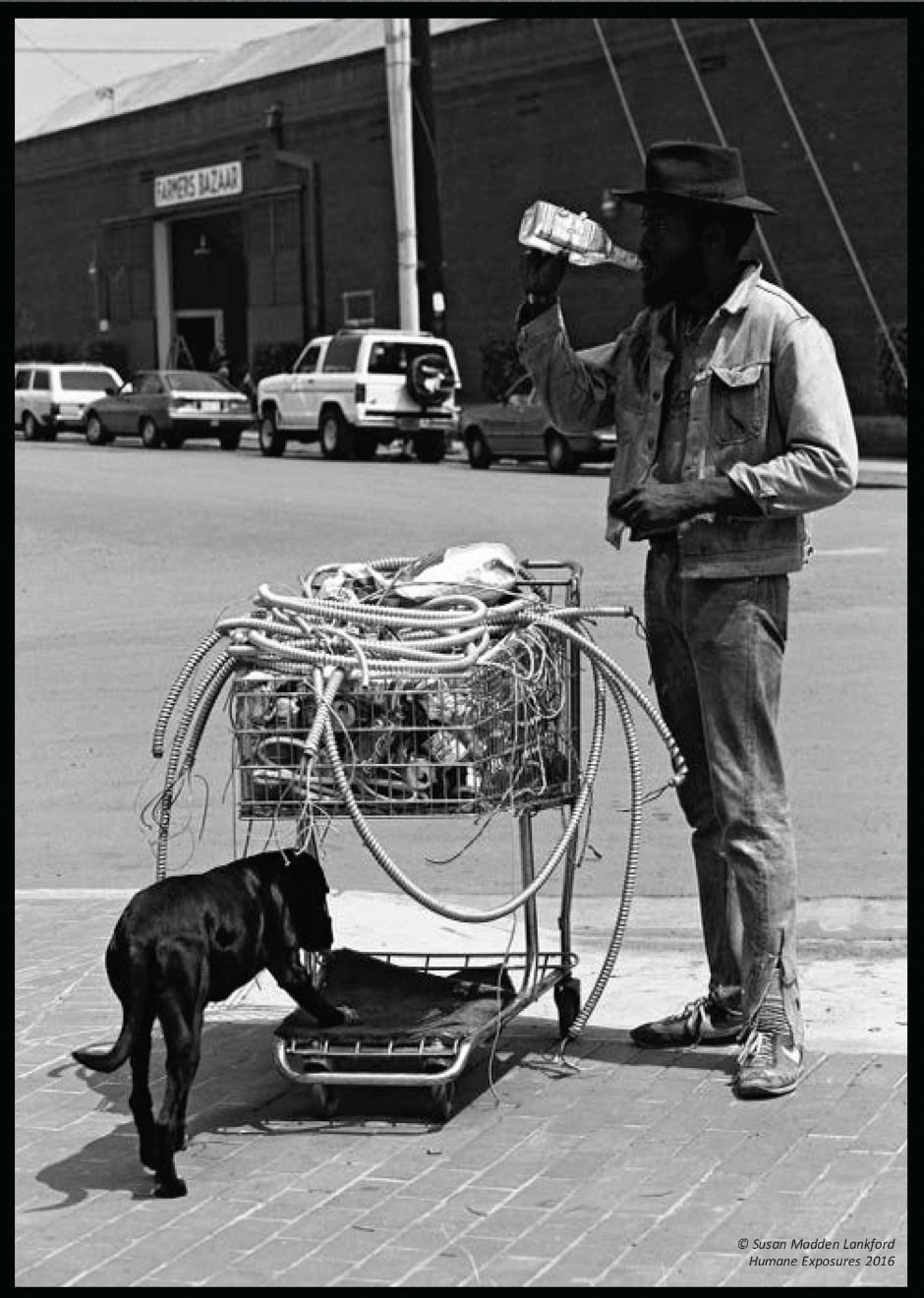
Today I’d like to share an article by Pat LaMarche that touches on aspects of the homeless problem that we have not yet examined in depth.

In her recent column on Common Dreams, None of the Poor Children Matter,  LaMarche comments on an increasingly common trend in US cities – the banishing from view of those in our society’s broken segments from the common view. This NIMBY (Not In My Back Yard) mentality is one that we are seeing with increasing frequency, and its “out of sight, out of mind,” stance can only make an already intolerable situation worse.

Officials in Clearwater, Fla., are working diligently to put the hungry in their place. In this case that place is eight miles out of town at a facility near the county jail. The St. Vincent de Paul soup kitchen is — according to the well fed elitists running the town — ‘enabling’ the handout taking behavior of those just looking for a meal.

This practice of the ‘haves banishing the have-nots’ to the hinterland is just a part of a trend that is sweeping the country. Clearwater isn’t alone in Florida and the practice is spreading to other regions. Philadelphia, Pa., has been in the news recently for their cutting-edge political philosophy that feeding people not only enables them but downright insults them if done in the presence of those who don’t need assistance.

To shuffle off the homeless to a site eight miles out of town in this fashion is reprehensible, to say the least. This is especially true when you factor in the number of children counted among the homeless.

It is appalling to shunt aside starving kids like this. I think we can all agree that children are innocent and not responsible for their circumstances. Privation during formative years like this is a recipe for a lifetime of ills, both social and physical.

The point that LaMarche makes with poigniant personal narrative is that not all of these children are young. The developmentally disabled are effectively children all their lives, and are often thrust onto the streets when their parents or guardians pass away.

 Many of the single women I worked with were permanently and equivalently 10, 11 or 12 years of age. Bonita — none of the names I’ll use here are real — told me when she showed up homeless at our once majestic hotel-turned-shelter, that she’d always wanted to live in a great big house with high ceilings and long stairways, but she didn’t know it would have so many homeless people in it.

You laugh or you cry in that line of work. Some days you do both.

I strongly advise reading this article, particularly for the story of the woman referred to simply as “Joan.” Trust me, it is a story that you need to read.

Drew Harwell of The Tampa Bay Times notes the ongoing battle between the city of Tampa and its homeless population: battle that involves the homeless being pushed further and further out of sight, despite their overwhelming numbers.

With more than 15,000 homeless people, the Tampa-St. Petersburg-Clearwater area has the highest rate of homelessness among metropolitan areas in the country, according to a 2012 report by the National Alliance to End Homelessness.

But Clearwater’s offerings for the homeless have shrunk as officials have pushed for consolidating services in places like Safe Harbor or a nearby tent city named Pinellas Hope — a practice critics deride as ‘warehousing.’ The Clearwater Homeless Intervention Project, a shelter and day center next to the soup kitchen that offered a number of services, closed last year after the city withdrew a $100,000 grant.

Are they deliberately trying to create new criminals? Think about it: if all of your options were suddenly gone and you had to resort to crime to put food in your children’s mouths wouldn’t you do it? Be honest.

By relocating food assistance eight miles out of town, the city is placing unnecessary hardship on people who already have a mountain of woes. The solution is to find a way to reintegrate them with day to day life, not to push them away in a fashion reminiscent of the way feudal lords in the Middle Ages treated their peasantry.

This trend of warehousing is one we intend to watch closely, as it is antithetical to every reputable finding on the subject of homelessness.

LaMarche is host of Maine’s The Pulse Morning Show (available online at zoneradio.com) and is also the author of Left Out In America: The State of Homelessness in the United States. Ms. LaMarche was the Green Party’s vice-presidential candidate in the 2004 U.S. presidential election.

If you are interested in learning more about the homeless issue in the US, you might wish to check out downTown U.S.A.: A Personal Journey with The Homeless, the first in our trilogy of books about modern-day social ills.

Share

Federal Intervention Requested at Orleans Parish Prison

Behind BarsTuesday evening the Southern Poverty Law Center filed for a preliminary injunction against the New Orleans sheriff’s office. This filing pointedly requested the intervention of a federal judge due to the severity of the allegations. 

This action come a mere one month after the SPLC  filed a proposed class-action lawsuit against Orleans Parish Sheriff Marlin Gusman over unsafe and unconstitutional jail conditions.  Allegations that were supported by a Department of Justice inspection a few weeks later that found “inadequate staffing levels in jail facilities, pervasive violence and substandard mental health care.”

These findings were hardly shocking to anyone who was paying attention back in 2009 when prior DOJ investigations revealed a similar level of unconstitutional activities. In the intervening time, to the intense frustration of advocates, there was practically no public communication from the feds or local authorities about how to resolve the problems.

This latest filing by the SPLC requests U.S. District Judge Lance Africk to both grant investigating attorneys “expedited discovery” and hold a hearing about the conditions in jail within the next 90 days. (It is worth noting that Gusman’s office had asked last month for an extension of the original lawsuit.)

As if the findings prompting the lawsuit were not enough, reports are now filtering in about escalating violence in the facilities under scrutiny – violence that seems to have a level of retribution in its make-up.

Laura Maggi, a reporter for The Times-Picayune, brings us the unpleasant details:

Since the lawsuit, there has been an ‘uptick’ in violence, while inmates who need mental health care continue to be neglected, wrote Katie Schwartzmann, managing attorney for the law center. For example, the filing accuses jail deputies of anally raping an inmate with an object, beating up another shackled inmate and failing to protect three inmates attacked by other inmates.

One of the original plaintiffs, inmate Kent Anderson, signed an affidavit that deputies have threatened him since the lawsuit, saying they could move him back to a jail facility where he believes isn’t safe. ‘Since my lawyers filed the lawsuit, things have been hell for me. Deputies tell me, ‘You want to complain about things? You want to tell your lawyers? We’ll send you back to Old Parish Prison,” according to the affidavit.

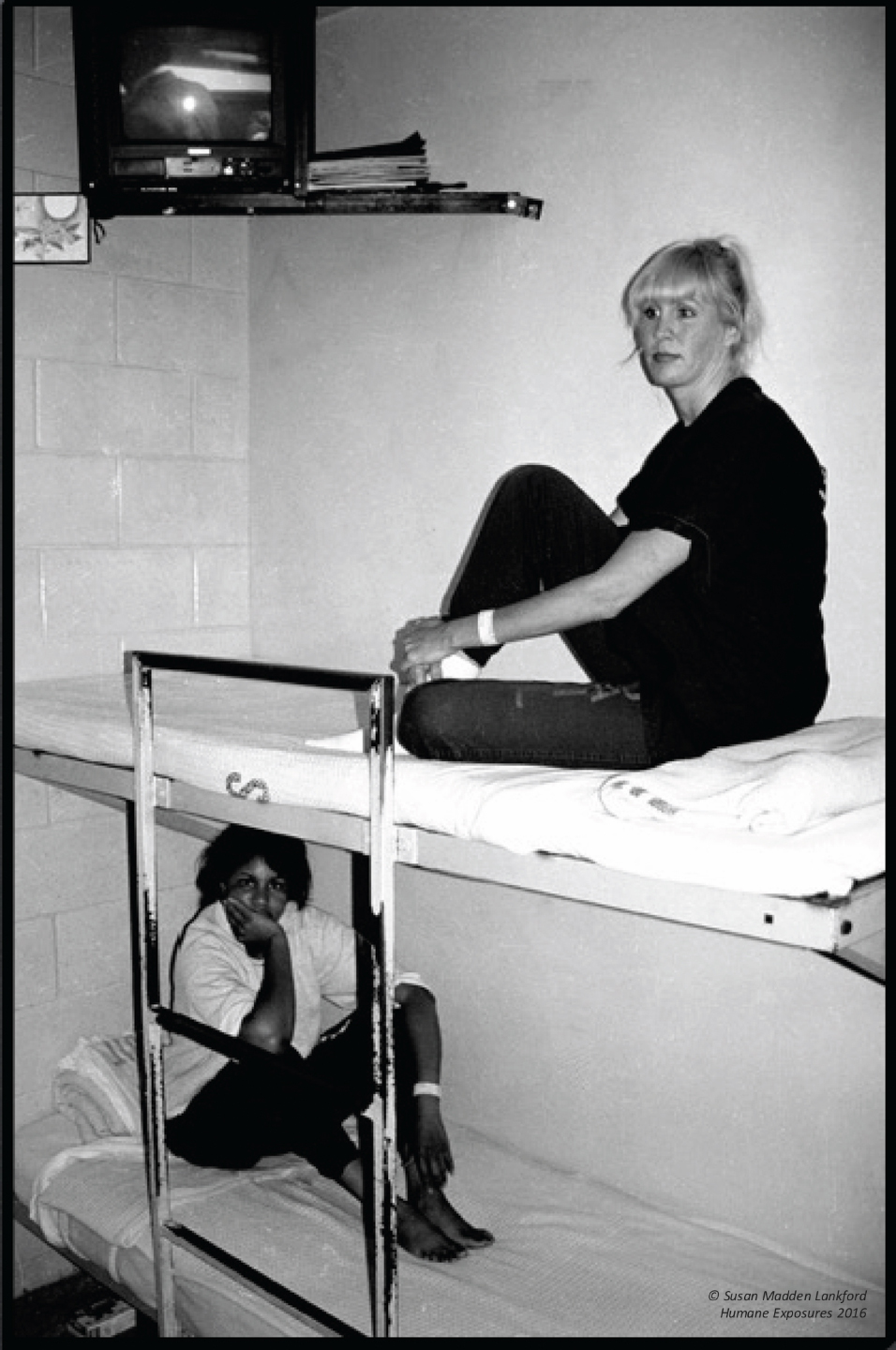
Our justice system is flat out broken, there is no other way to truthfully describe it. Conditions of overcrowding and violence are found across the nation, and often in facilities housing not only male offenders, but also those incarcerating women and youths.The situation in Orleans Parish Prison is a horrible reminder of this fact.


Share

Talking about the Juvenile Detention Alternative Initiative (JDAI)

Bart Lubow, Director of Juvenile Justice Strategy for the Annie E. Casey Foundation talks about the Juvenile Detention Alternative Initiative (JDAI) at an April 2012 conference in Houston dedicated to the topic. JDAI is currently the the most widely replicated juvenile justice system reform project in the nation, with initiatives in 38 states.

Share

Racism in Memphis: Shelby County Juvenile System on the Hot Seat

Say No To Racism Vector StickerThe Memphis’ juvenile jail has been found decidedly wanting in a recent federal investigation.  According to it’s findings, there have been problems at the Shelby County Juvenile Court for years, mainly concerned with overly harsh discipline, inadequate protection of the incarcerated, and a strong dose of racism in the way that the inmates are treated. 

Thomas Perez, head of the DOJ’s Civil Rights Division in Washington, reported Thursday that both his attorneys and outside consultants found “systemic civil-rights violations as well as patterns of discrimination against black youths, who are more likely to be detained, to receive tougher punishments and to end up in the adult system.”

Beth Warren at The Commercial Appeal gives us a bit more detail on the DOJ findings:

Detention officers have used restraint chairs to strap down juveniles and pressure-point control tactics, such as bending a youth’s wrist backward to induce pain, according to a three-year investigation by the U.S. Department of Justice. Both, as practiced in Memphis, are unconstitutional, according to the report by the DOJ’s Civil Rights Division.

The report also found dangers in the physical layout of the jail, such as its two-level design with a balcony.

‘There is no systematic suicide-proofing of the building, no education to detention staff regarding necessary precautions and no plans to correct these risks,’ according to the report.

These issues are of grave concern, but even worse is the widespread racism endemic in the justice system. Unlike the situation inside the facility, the racist component begins on the streets. Just look at the arrest findings (via WREG TV, Memphis)

Black juveniles who were arrested in Memphis and surrounding Shelby County were twice as likely as whites to be detained in jail and twice as likely to be recommended for transfer to adult court, where a conviction generally brings harsher punishment, Perez said.

As is established in numerous reports over recent years, when you put juveniles into adult facilities the recidivism rate spikes. In other words, a much larger percentage of them are arrested again after release. The simple fact is that placing youth in facilities with adult offenders creates a training ground for criminals.

Perez has publicly stated that the goal is not to place blame, but to find a way to fix the problem. We will be keeping an eye on Shelby County and will let you know how well he does.

Image by Vector Portal, used under its Creative Commons license

Share

Born, Not Raised – The Trailer

It is finally here! Ladies and Gentlemen, allow me to present the Born, Not Raised video trailer!

So, what did you think?

Share